Taking stock: Policy-level progress on environmental crime in 2025

Elodie Perrat, Senior Manager, Nature Crime Alliance Secretariat, shares her thoughts on the progress made at the international level to counter environmental crime, and what lies ahead in 2026.
One of the strategic objectives of the Nature Crime Alliance is to increase political will among governments to more effectively prevent and combat environmental crime. This requires sustained engagement across the international fora that shape governments’ policies, priorities, and enforcement frameworks worldwide.
In 2025, momentum continued to build across several multilateral processes—though progress was uneven.
Below are our key policy takeaways from this year.
1) Political will continued to rise
Environmental crime featured more prominently in high-level political discussions in 2025, signaling growing recognition of its seriousness.
At the G20 Leaders’ Summit in Johannesburg, South Africa, on 22–23 November, the Leaders’ Declaration referenced several pertinent issues closely linked to environmental crime, including illegal, unreported and unregulated (IUU) fishing; corruption; implementation of the UN Convention Against Corruption (see below); and whistleblower protections. The Declaration also cited the Cape Town Ministerial Declaration on Crimes that Affect the Environment, which recognises ‘the urgent need to strengthen national responses to address’ these crimes.
Another indication of increasing political will came in Rio de Janeiro, where ministers and civil society representatives gathered for the United for Wildlife Environmental Crime Summit and International Wildlife Crime Conference in November. Two outcomes were particularly significant; The launch of the Coalition for Multilateral Action against Crimes that Affect the Environment, led by Brazil, and the signing of the Rio Declaration on Crimes that Affect the Environment by a range of countries, supported by civil society stakeholders.
Both initiatives aim to catalyse more coordinated, ambitious international action against environmental crime.
2) Environmental crime gained traction on the conservation agenda
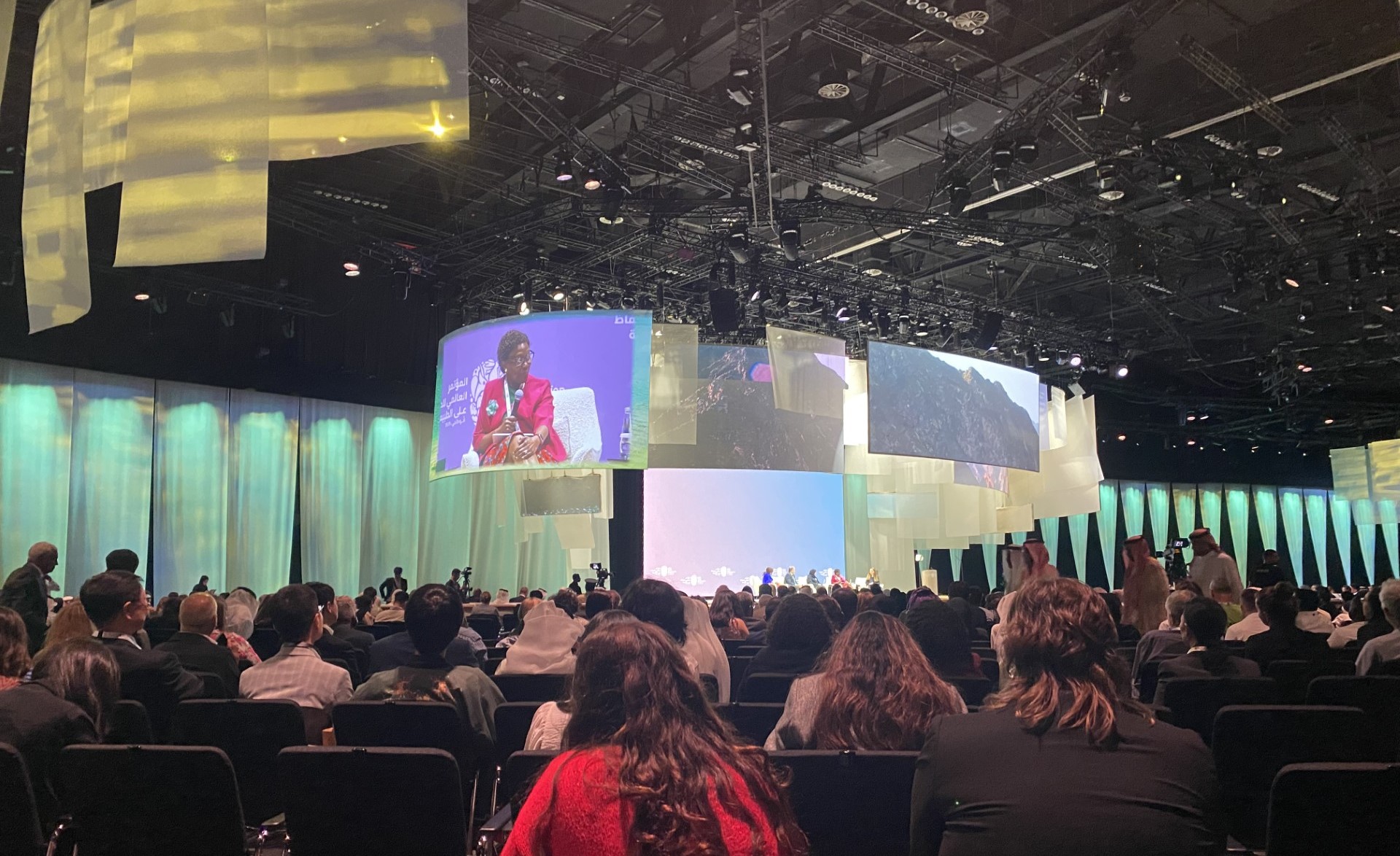
A major milestone this year was the adoption of a new resolution on Crimes that Affect the Environment at the IUCN World Conservation Congress in Abu Dhabi, UAE, in October.
The resolution gives IUCN a mandate to address environmental crime across its programme of work, and calls on the global conservation community to collaborate in tackling illicit activities such as illegal logging, mining, fishing, wildlife trafficking, and related offences.
Its adoption represents a landmark moment in firmly embedding environmental crime within the conservation agenda. The challenge now will be translating this mandate into concrete actions, and integrating it into the strategies and programmes of IUCN Members.
Progress was also evident under the Convention on International Trade in Endangered Species of Wild Fauna and Flora (CITES). At the 20th Conference of the Parties (COP20) in Samarkand, Uzbekistan, in December, States Parties adopted stronger enforcement measures and tighter regulations across multiple species groups . Protections were enhanced for sharks, rays, Galapagos iguanas, two-toed sloths, vipers, geckos, among others. Several species were uplisted, limiting or banning commercial trade in a win for biodiversity. COP20 also saw a focus on the exotic pet trade, drawing attention to enforcement gaps exploited by criminal networks.
3) Environmental crime advanced unevenly across multilateral frameworks
By contrast, progress stalled at the 7th UN Environment Assembly in Nairobi, Kenya, in December, where a resolution on ‘Enhancing international response to address Crimes that affect the environment’ -proposed by Peru and Kenya – was withdrawn due to insufficient consensus. Many States expressed preference for the issue of crimes affecting the environment to remain anchored in Vienna-based crime and justice processes, rather than under UNEA.
While the debate at UNEA demonstrated that environmental crime is gaining prominence across the UN system, the resolution’s withdrawal highlights the political sensitivities and institutional challenges that remain.
4) Corruption’s role in environmental crime was further recognised
The enabling role of corruption in environmental crime received increased attention in 2025.
At the 11th Conference of the States Parties (COSP11) to the UN Convention Against Corruption (UNCAC) that convened in Doha, Quatar, in December, Member States adopted a new resolution on ‘Preventing and combating corruption as it relates to crimes that affect the environment’ tabled by Brazil and Namibia.
Given the central role corruption plays in enabling environmental crime, this was a major step forward in tackling this global challenge, committing States to stronger implementation of UNCAC provisions. However, the resolution falls short of treating crimes against the environment as predicate offences for crimes such as money laundering —an area where further progress remains necessary.
5) Key Opportunities for momentum in 2026
Looking ahead, 2026 presents several strategic opportunities to advance international action on environmental crime.
The 15th UN Crime Congress to be held in Abu Dhabi, UAE, 15-30 April, is a major opportunity to drive progress at the international level. The Abu Dhabi Declaration, currently being negotiated as the Crime Congress outcome document, is expected to set global direction on crimes that affect the environment, potentially including negotiation of a new protocol to the UN Convention against Transnational Organized Crime (UNTOC).
Ahead of the Congress, the 2nd Meeting of the UNTOC Intergovernmental Expert Group on Environmental Crimes (IEG), will convene in Vienna on 24-26 February. The meeting will see member states adopt recommendations for the 13th UNTOC COP, which whill be held in October 2026.
The Nature Crime Alliance Secretariat will continue to support efforts at the policy level to strengthen international responses to environmental crime.
Members interested in collaborating on side events or related initiatives at upcoming international fora are encouraged to get in touch with Elodie Perrat, Senior Manager, Nature Crime Alliance, at elodie.perrat@wri.org

Keep Informed
Subscribe to Our Newsletter
Sign up here to receive news, analysis and event updates from the Nature Crime Alliance.