New toolkit aims to strengthen financial investigations into environmental crimes
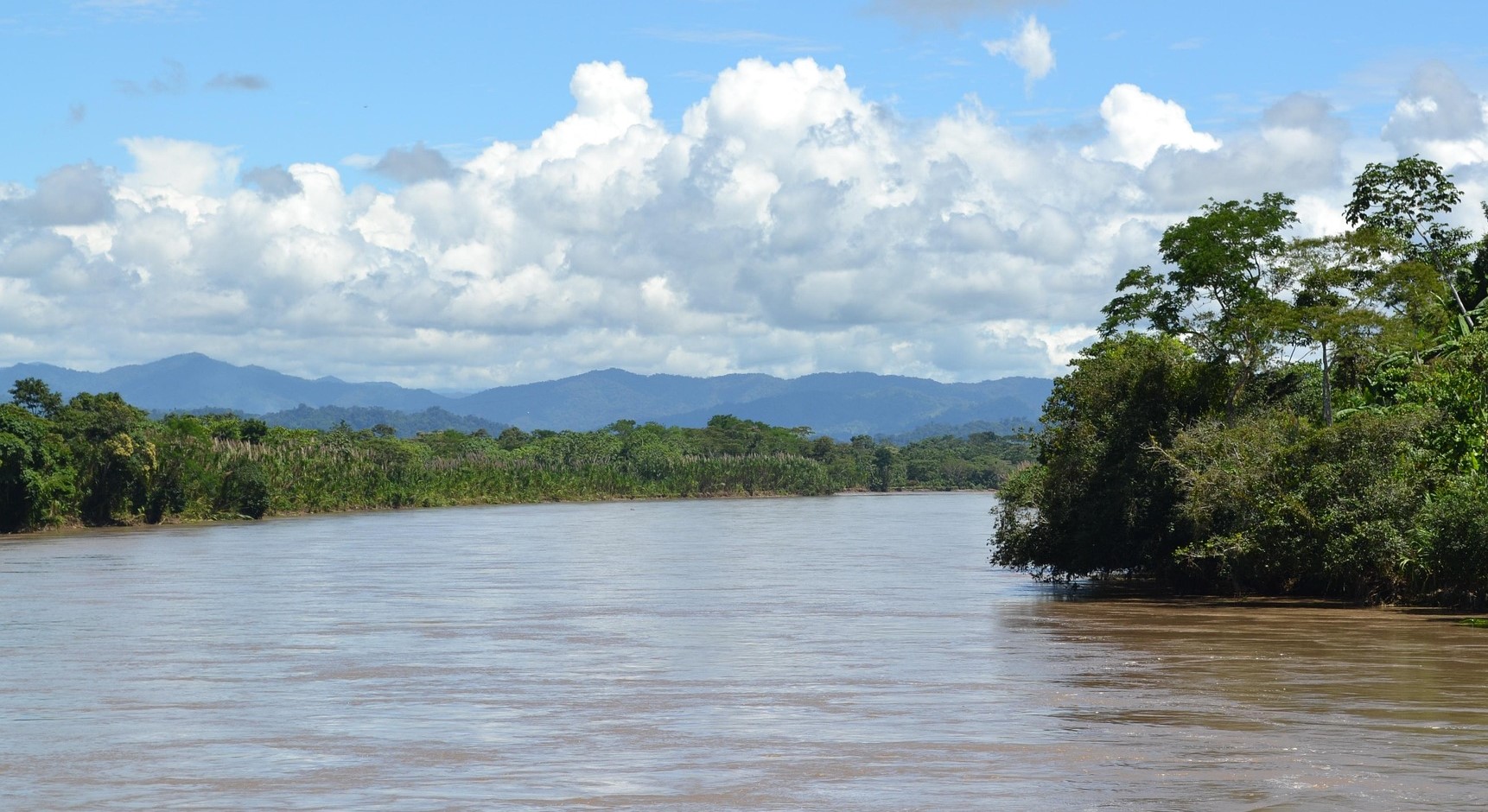
The toolkit, produced by FCDS Peru, is part of a project implemented by World Resources Institute – which hosts the Nature Crime Alliance – alongside Rainforest Foundation US and FCDS Peru, with support from the Bureau of International Narcotics and Law Enforcement Affairs.
Environmental crimes such as illegal logging and mining are underpinned by illicit financial activities, including corruption, money laundering, and fraud. Addressing these financial aspects of environmental crime offers an effective approach to disrupting the networks involved in the plundering of nature, enabling broader investigations and ensuring meaningful legal proceedings.
More broadly, understanding the financial networks involved in the illegal extraction of natural resources can help identify the economic structures sustaining these illicit activities, thereby helping to disrupt such crimes before they occur.
However, the fragmentation of knowledge and resources within law enforcement and judicial response is a key challenge. It is crucial to marshal complex or disparate technical information into practical approaches that allow financial analysis to be incorporated into environmental crime investigations. Otherwise, opportunities to ‘follow the money’ and expand the scope of an investigation may be lost.
To address this challenge, the Foundation for Conservation and Sustainable Development of Peru (FCDS Peru) recently released the toolkit – ‘Financial Trail Behind Environmental Crimes‘.
The toolkit aims to translate technical evidence and lessons learned from working with justice officials into practical guidelines that can facilitate the integration of financial analysis into environmental crime investigations.
The toolkit was developed from a recent study, ‘Money Transactions in the Supply Chain of Illegal Gold and Timber Economies in the Peruvian Amazon’, produced by FCDS Peru and the Institute of Criminology and Violence Studies (ICEV), alongside insights gathered during associated activities. These include national workshops with prosecutors from various specialized units and public agencies, binational forums involving Peruvian and Colombian authorities, and technical assistance provided for national and cross-border environmental crime investigations. A series of podcasts were also produced to accompany the initiative.
Inextricable links
The study highlighted the close relationship between environmental crime and the illicit economies that fuel it, as well as the financial flows that enable and conceal these activities. It also identified how these illicit economies intersect with legal markets.
It shows how environmental crimes rely on financial resources, goods, inputs, and services, alongside mechanisms for financing, logistics, and commercialization. Financing in these areas plays a role throughout the illicit supply chain – from funding the transport of illegal goods to reinvesting profits, often into legitimate sectors of the economy. This convergence with formal markets can make it difficult to detect financial activities linked to environmental crimes.
The research also identified challenges in investigating financial flows, which often require capabilities and resources from various areas of law enforcement and the financial sector. For instance, an investigation might require knowledge of both environmental law and international finance, as well as expertise in taxation and asset recovery.
What is in the toolkit?
The ‘Financial Trail of Environmental Crimes’ toolkit offers practical guidance to help investigators “follow the money” through five key steps:
1 – Understanding the phenomenon
This first step provides an overview of how environmental crimes are financed and concealed, emphasizing the role of illicit economies linked to gold and timber extraction. Understanding the dynamics of this criminal landscape allows investigators to broaden their hypotheses beyond the visible offense and identify actors and relationships that might otherwise go undetected in an investigation focused solely on the initial intervention.
2 – Following the money
Tracing the money trail is crucial for identifying the actors who finance, mobilize resources for, or profit from, illegal activity. However, investigations should not focus exclusively on the final destination of the proceeds. Money does not merely appear after the crime has been committed; it also enables the crime to occur in the first place. A financial investigation requires identifying when money enters the picture, its intended use, the payers and recipients, the flow of funds, and the link between the transaction and the illicit product.
This step outlines four main types of transactions identified within gold and timber supply chains: resources allocated to production; labor payments; domestic buying, selling, and reselling; and international trade. It also offers guidance on where to look for the money. For instance, prior to timber or gold extraction, funds are used to finance supplies, machinery, and services. During illegal operations, money may appear as payments to workers and intermediaries, while post-extraction, financial activity is visible in processing, marketing, and export. The proposal is to simultaneously track the product’s path and the money trail. While the former makes it possible to reconstruct the movement of gold or timber, the latter allows for identifying who provides the financing, who pays, who receives payment, and who benefits financially from the activity.
3 – Recognizing how money is concealed
Once the points where money appears within illegal gold and timber supply chains have been identified – and a transaction has been analyzed in context – the next step is to determine what the various operations reveal when viewed in relation to one another. Funds linked to these economies can move through diverse mechanisms: being split into multiple transactions, circulating through third parties or companies, co-mingled with legitimate economic activities, backed by sham transactions, or converted into other goods and assets.
This step presents typologies, red flags, and patterns as tools to guide financial investigations. None of these elements, in isolation, prove that a crime was committed. The goal is to move from viewing an operation in isolation to reconstructing the relationships and patterns connecting actors, transactions, products, and assets.
4 – Preventing the loss of the financial trail
An investigation may possess relevant financial, tax, corporate, asset-related, commercial, or territorial information yet still fail to reconstruct the financial flow. The trail can weaken when an operation fails to trigger an alert, data is not converted into actionable information, information is fragmented across different entities, capacity constraints exist, or action depends on another government entity.
This step identifies the key institutional and operational gaps that can hinder the detection, reconstruction, and timely use of a financial connection. It also proposes criteria for focusing the investigation, integrating sources, and converting financial information into evidence useful for the investigation and for asset-related enforcement actions.
5 – Investigating cross-border environmental crimes
An investigation into environmental crimes may begin within national territory and reveal connections to other countries, such as an international transfer, a company incorporated in another jurisdiction, a foreign buyer, a person under investigation outside the country, an asset located in another state, or information held by a foreign authority needed to corroborate a working hypothesis. When such connections arise, international cooperation becomes a key tool for expanding the investigation.
This step proposes a practical set of steps: identifying the cross-border element at an early stage, defining investigative requirements, determining the location of the asset and the party controlling it, and selecting the appropriate channel or mechanism to obtain it or to take coordinated action. International cooperation is not an end in itself. Its utility depends on what it enables the investigation to verify, obtain, preserve, or execute.
Reducing illegal logging and gold mining
This toolkit is published as part of the project ‘Reducing illegal logging and gold mining in the Colombian and Peruvian Amazon: technological deployment, prosecution of financial crimes, and enhanced cross-border cooperation,’ implemented by the World Resources Institute (WRI), Rainforest Foundation US, and FCDS Peru, with support from the Bureau of International Narcotics and Law Enforcement Affairs (INL).

Keep Informed
Subscribe to Our Newsletter
Sign up here to receive news, analysis and event updates from the Nature Crime Alliance.