APAC Dialogue explores environmental crime risk to finance and transport sectors
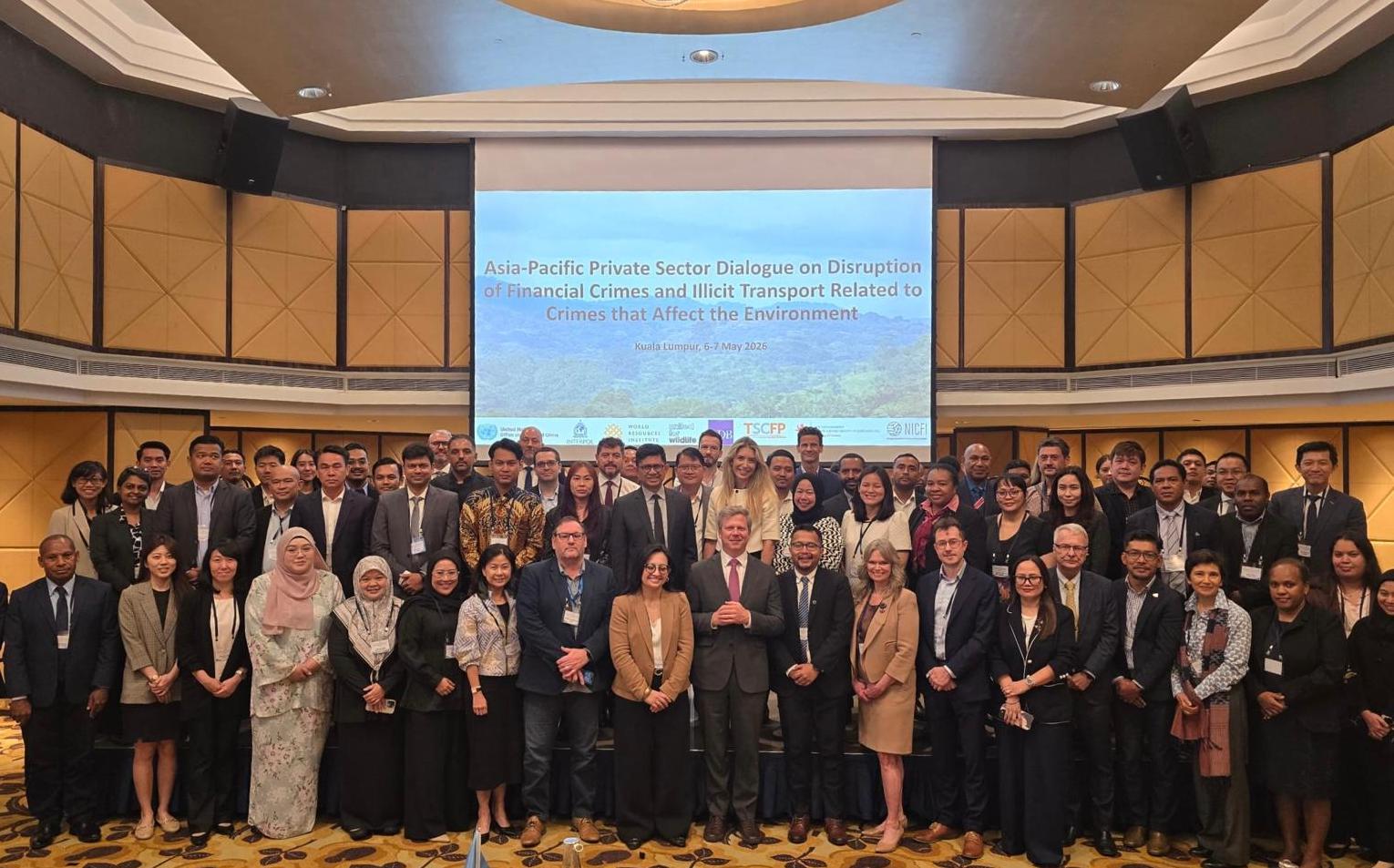
The latest Asia-Pacific Regional Private Sector Dialogue (PSD) on the disruption of financial crimes related to crimes that affect the environment convened in Kuala Lumpur in May, with representatives from the transport sector joining the discussion for the first time.
Organised by the UN Office on Drugs and Crime, INTERPOL, and World Resources Institute (WRI) – which hosts the Nature Crime Alliance – in partnership with United for Wildlife, the PSDs aim to improve the private sector’s understanding of environmental crimes and related risk.
The latest Dialogue brought together government representatives from 18 countries, 14 private sector organisations and 13 civil society and academic institutions.
Transport sector joins the discussion
The inclusion of representatives from the shipping and transport sector saw new topics explored in the Dialogue, including methods for improving vessel screening and identifying risk indicators – such as high-risk ports, flags of convenience or links to sanctioned entities. In addition, various tools for improving due diligence and ‘know your customer’ screening, including the use of mapping and satellite imagery, were highlighted by subject matter experts.
The value of public-private partnerships in disrupting financial crime linked to environmental crime was also highlighted during the session, which was hosted by the Asian Development Bank. Participants showcased how well-designed public-private partnerships are delivering tangible investigative leads, drawing on case studies from previous PSDs.
Particular attention was given to the importance of improved feedback loops between the public and private sectors for accelerating operational cooperation resulting in the disruption of environmental crimes.
Adding value
This was the second meeting of the Asia Pacific Regional PSD, which first took place in Singapore in 2024. The post-dialogue evaluation questionnaire reported that 100% of participants found the Dialogue enabled them or their organisation to identify new risk indicators, red flags and/or suspicious transactions of financial crimes related to environmental crimes, while 88% reported that the inclusion of the transport sector in the Dialogue, alongside the private financial sector, was extremely valuable.
The Dialogue was Chaired by John Edward Conway, Executive Secretary of the Wolfsberg Group and Laode Muhammad Syarif, Senior Lecturer at the Hasanuddin University Law School and Former Commissioner of the Corruption Eradication Commission of the Republic of Indonesia. Lynn Schlingemann, Senior Associate Financial Crime and Corruption, WRI, coordinated the session.
For more information on the PSDs, please contact Lynn.Schlingemann@wri.org

Keep Informed
Subscribe to Our Newsletter
Sign up here to receive news, analysis and event updates from the Nature Crime Alliance.