Building momentum on environmental crime: Why 2026 matters
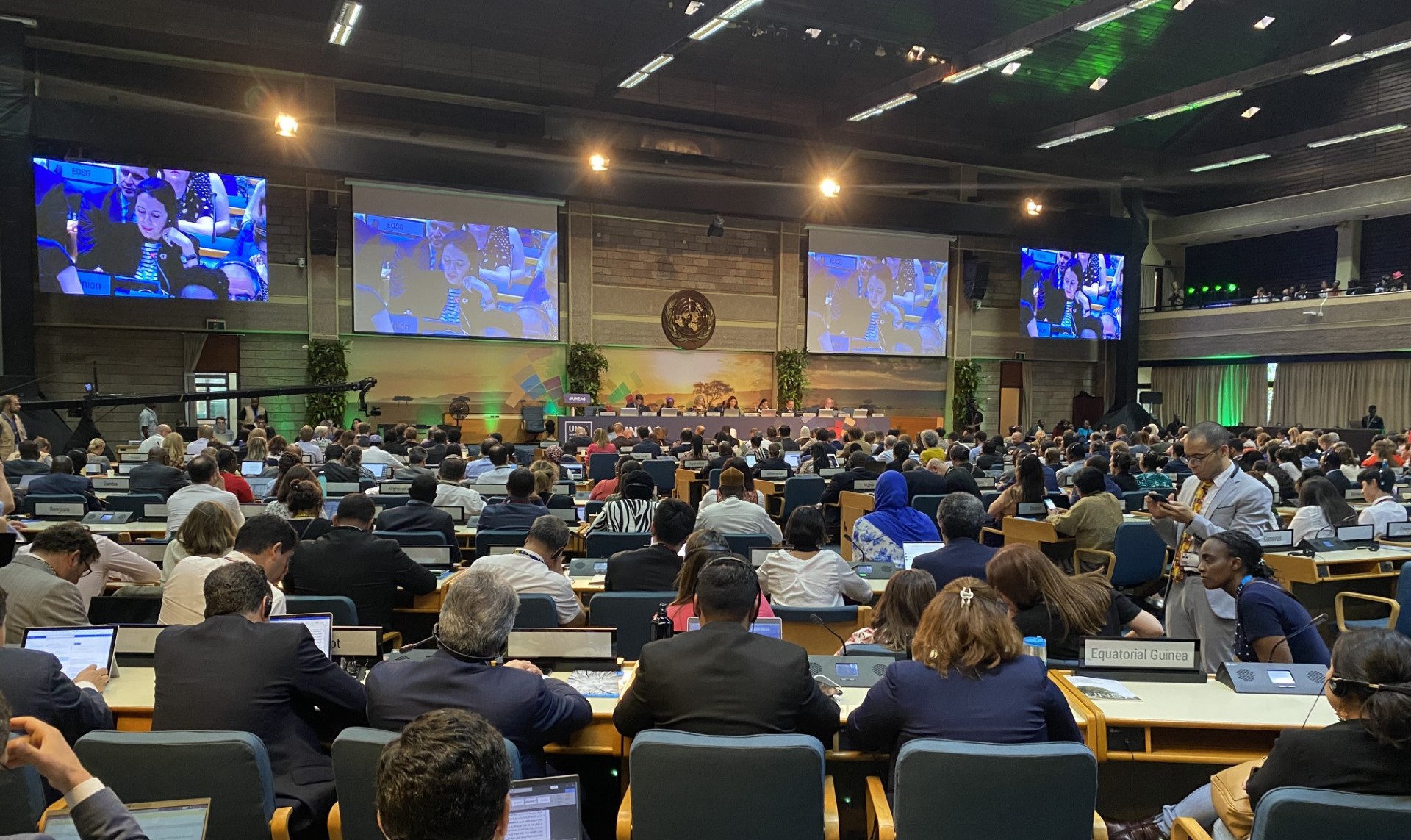

Elodie Perrat, Senior Manager, Nature Crime Alliance Secretariat, shares her thoughts on the key moments that could drive international progress on environmental crime this year.
Environmental crime—such as illegal mining, logging, fishing, and wildlife trafficking—continues to devastate ecosystems, undermine livelihoods, and fuel corruption and human rights abuses. Increasingly, governments recognise that global biodiversity and climate goals cannot be met without addressing these crimes more effectively. Yet international responses remain fragmented, spread across environmental, criminal justice, and financial governance systems that often operate in silos.
Against this backdrop, 2026 presents a series of policy moments that could help shift the international response to environmental crime from piecemeal action toward a more coherent and coordinated architecture. Building on important breakthroughs in 2025, these moments span criminal justice, illicit finance, environmental governance, and multilateral diplomacy. Whether they translate into durable change will depend on governments’ ability to align action across these domains and move decisively from political commitments to implementation.
Strengthening the criminal justice response
At the heart of this momentum is the international criminal justice system. The 15th UN Crime Congress, convening in Abu Dhabi from 15–30 April, offers a major opportunity to consolidate global attention on crimes that affect the environment. The Congress follows the IUCN World Conservation Congress, also hosted in Abu Dhabi in October 2025, which adopted a resolution on crimes that affect the environment—firmly anchoring the issue within the global conservation agenda.
The proximity of these two major gatherings is significant. At the IUCN Congress, discussions repeatedly underscored the need to carry conservation momentum into criminal justice processes. This was reflected in a session convened by the UAE Interior Ministry on the role of law enforcement in addressing environmental crime, with contributions from the Ministry’s Foreign Affairs Bureau, Brazil’s Federal Police, France’s Gendarmerie Nationale, UNODC, and ESRI. These discussions highlighted growing recognition that environmental crime must be treated not only as an environmental issue, but as a serious, organised, and often transnational criminal threat.
The Crime Congress’s outcome document, the Abu Dhabi Declaration, is currently under negotiation and is expected to help set global priorities on crimes that affect the environment. If adopted with strong and specific language, it could consolidate international consensus and strengthen the mandate of UNODC and national criminal justice authorities to address these crimes more systematically.
Momentum may also build around a potential new protocol to the UN Convention against Transnational Organized Crime (UNTOC). Championed by the Global Initiative to End Wildlife Crime, a founding member of the Nature Crime Alliance, such a protocol would elevate environmental crimes within the UNTOC framework, alongside human trafficking, migrant smuggling, and firearms trafficking. The 2nd Meeting of the UNTOC Intergovernmental Expert Group on Environmental Crimes, convening in Vienna from 24–26 February, will be a key moment in shaping recommendations ahead of UNTOC COP13 later in the year.
Following the money
While criminal justice frameworks are essential, they are insufficient on their own. Environmental crime is driven by profit, and tackling its financial underpinnings is critical. In June, the UK Government will host an international summit on illicit finance, with illegal gold expected to feature prominently. Rising gold prices have intensified illegal, environmentally destructive mining, increasing pressure on governments to act.
The UK summit aims to build an international coalition to address illicit financial flows linked to illegal gold, including through stronger law enforcement cooperation. It follows a setback at the 7th UN Environment Assembly (UNEA-7), where proposals for a binding international minerals treaty were scaled back to a non-binding resolution—illustrating the political sensitivities surrounding extractive industries.
As attention turns to implementation, parallel discussions within financial integrity frameworks will be crucial. In particular, debates within FATF-related processes will shape whether crimes against the environment are treated consistently as predicate offences for money laundering. Progress in this area remains uneven, yet without it, efforts to disrupt the financial incentives driving environmental crime will remain limited.
Corruption, a key enabler of environmental crime, has received increased attention as well. At the 11th Conference of the States Parties to the UN Convention against Corruption (UNCAC), convened in Doha, Qatar, in December 2025, Member States adopted a new resolution on preventing and combating corruption related to crimes that affect the environment. Tabled by Brazil and Namibia, the resolution represents an important step forward. However, it stops short of fully integrating environmental crimes into anti-money laundering frameworks—highlighting an ongoing gap between political recognition and operational impact.
Environmental governance and regional leadership
Environmental crime is also increasingly recognised within environmental governance processes. As countries move into implementation of the Kunming–Montreal Global Biodiversity Framework, addressing the illegal exploitation of natural resources will be essential to achieving biodiversity targets. This reinforces the need for stronger alignment between biodiversity policy and criminal justice responses.
In Europe, a landmark development occurred in December 2025, when the European Union signed the Council of Europe Convention on the Protection of the Environment through Criminal Law. As the first international legally binding instrument dedicated specifically to environmental crime, the Convention goes beyond the EU Directive’s minimum standards by establishing common definitions and criminalisation requirements. It obliges Parties to ensure that serious environmental offences are punishable by effective, proportionate, and dissuasive sanctions, creating a framework with potential relevance well beyond Europe.
UNEA-7 and its follow-up processes will remain important spaces to watch in 2026, particularly for issues such as illegal mining, mercury use, and environmentally harmful supply chains. While recent negotiations have exposed political sensitivities, UNEA remains a critical forum for bridging environmental and criminal justice agendas.
Political coalitions and multilateral momentum
Beyond formal treaties and resolutions, political momentum is also building through coalitions and declarations. At the G20 Leaders’ Summit in Johannesburg in November 2025, the Leaders’ Declaration referenced several issues closely linked to environmental crime, including illegal, unreported and unregulated fishing, corruption, whistleblower protections, and implementation of UNCAC. It also cited the Cape Town Ministerial Declaration on Crimes that Affect the Environment, recognising the urgent need to strengthen national responses.
Further momentum emerged in Rio de Janeiro at the United for Wildlife Environmental Crime Summit and the International Wildlife Crime Conference. Two outcomes were particularly significant: the launch of the Coalition for Multilateral Action against Crimes that Affect the Environment, led by Brazil, and the signing of the Rio Declaration on Crimes that Affect the Environment by a growing number of countries, supported by civil society stakeholders.
With Brazil playing a prominent convening role across environmental and climate fora, climate-related processes—including COP follow-up—may increasingly serve as platforms to highlight the climate impacts of environmental crime, particularly illegal deforestation and mining.
Members interested in collaborating on side events or related initiatives at upcoming international fora are encouraged to get in touch with Elodie Perrat, Senior Manager, Nature Crime Alliance, at elodie.perrat@wri.org

Keep Informed
Subscribe to Our Newsletter
Sign up here to receive news, analysis and event updates from the Nature Crime Alliance.