Alliance expert briefs UN officials on forest crime
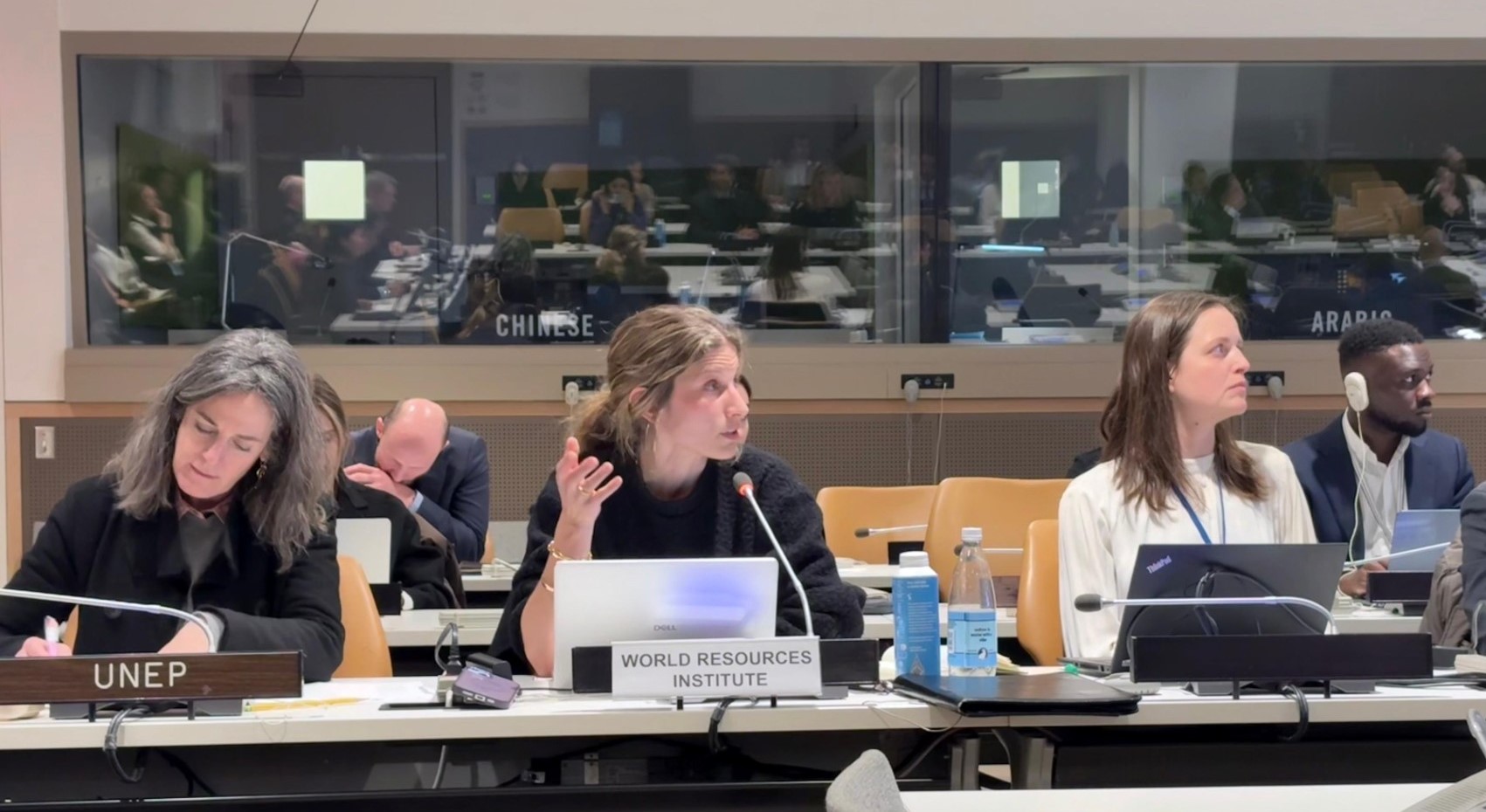
Key aspects of forest crime and the solutions to tackling this global challenge were explored by Elodie Perrat, Senior Manager at the Nature Crime Alliance, during a briefing with UN officials convened to mark World Wildlife Day.
Elodie, the Alliance’s policy lead, spoke at the ‘Conserving our Forests: Challenges and Opportunities for Combatting Forest Crime’ meeting in New York, hosted by the Permanent Missions to the UN of Germany, Gabon, and Brazil, and the UN Office on Drugs and Crime (UNODC).
The role of organised crime and corruption
Elodie highlighted how illegal deforestation and logging are not marginal compliance failures. They are structured, deliberate, and financially sophisticated crimes, often conducted by organised criminal networks and enabled by corruption.
The same criminal actors involved diversify across illegal logging, mining, land grabbing, wildlife trafficking, and financial crime across the Amazon Basin, Congo Basin, and Southeast Asia, Perrat said, drawing on insights from the UNODC’s report ‘Forest Crimes: Illegal Deforestation and Logging’, part of the 2025 Global Analysis on Crimes that Affect the Environment and the ‘People, Planet, Justice‘ report, published by World Resources Institute (WRI), host of the Nature Crime Alliance, last year.
A key challenge is market infiltration, Elodie noted, with illegal timber entering legal supply chains through fraudulent documentation, corrupt concessions, and trade mis-invoicing. “Forest crime does not sit outside the global economy, it hides within it,” she said.
Engaging the financial system in the response to these crimes is essential. “The $51–152 billion generated annually from illegal logging flows largely undetected through the global financial system — because environmental crime is still barely treated as a predicate offence under anti-money laundering frameworks,” Elodie said. “We’ve built systems to regulate timber. We haven’t built systems to regulate the money it generates. Until we do, we’re addressing symptoms.”
Initiatives like the Global and Regional Private Sector Dialogues, convened by Nature Crime Alliance members UNODC, WRI, and INTERPOL, have demonstrated the value of engaging the financial system to counter these crimes.
Priority actions
During her remarks, Elodie set out seven priority actions that should shape the global response:
Strengthen the international legal architecture. The second meeting of the Intergovernmental Expert Group (IEG) on crimes that affect the environment under the UN Convention against Transnational Organized Crime (UNTOC) in Vienna last week ended without consensus — but a larger number of countries than previously expressed support for a Protocol. The failure was in the process, not the principle.
Treat forest crime as financial crime. Nature crime proceeds must be integrated into anti-money laundering frameworks as predicate offences — enforcement must follow the money, not just the chainsaws.
Close the displacement gap in trade regulation. Regulations like the EU Deforestation Regulation (EUDR) risk generating displacement without coordinated enforcement. Due diligence in importing countries must be matched by equivalent measures in producer countries.
Strengthen transnational enforcement cooperation. Intelligence must flow across customs, finance, and environmental authorities. Regional Private Sector Dialogues bringing together FIUs, banks, and enforcement agencies should be scaled.
Secure forest frontiers through rights-based governance. Land tenure for Indigenous and forest-dependent communities must be strengthened — their displacement creates the governance vacuums that criminal actors exploit.
Protect forest defenders as an enforcement strategy. Legal protection and accountability for attacks on defenders are not peripheral human rights concerns. They are operational enforcement priorities.
Align climate, biodiversity, and crime agendas. Meeting 2030 deforestation commitments is impossible while treating the criminal economy driving deforestation as a separate problem. These agendas must converge in institutions, funding, and political will.
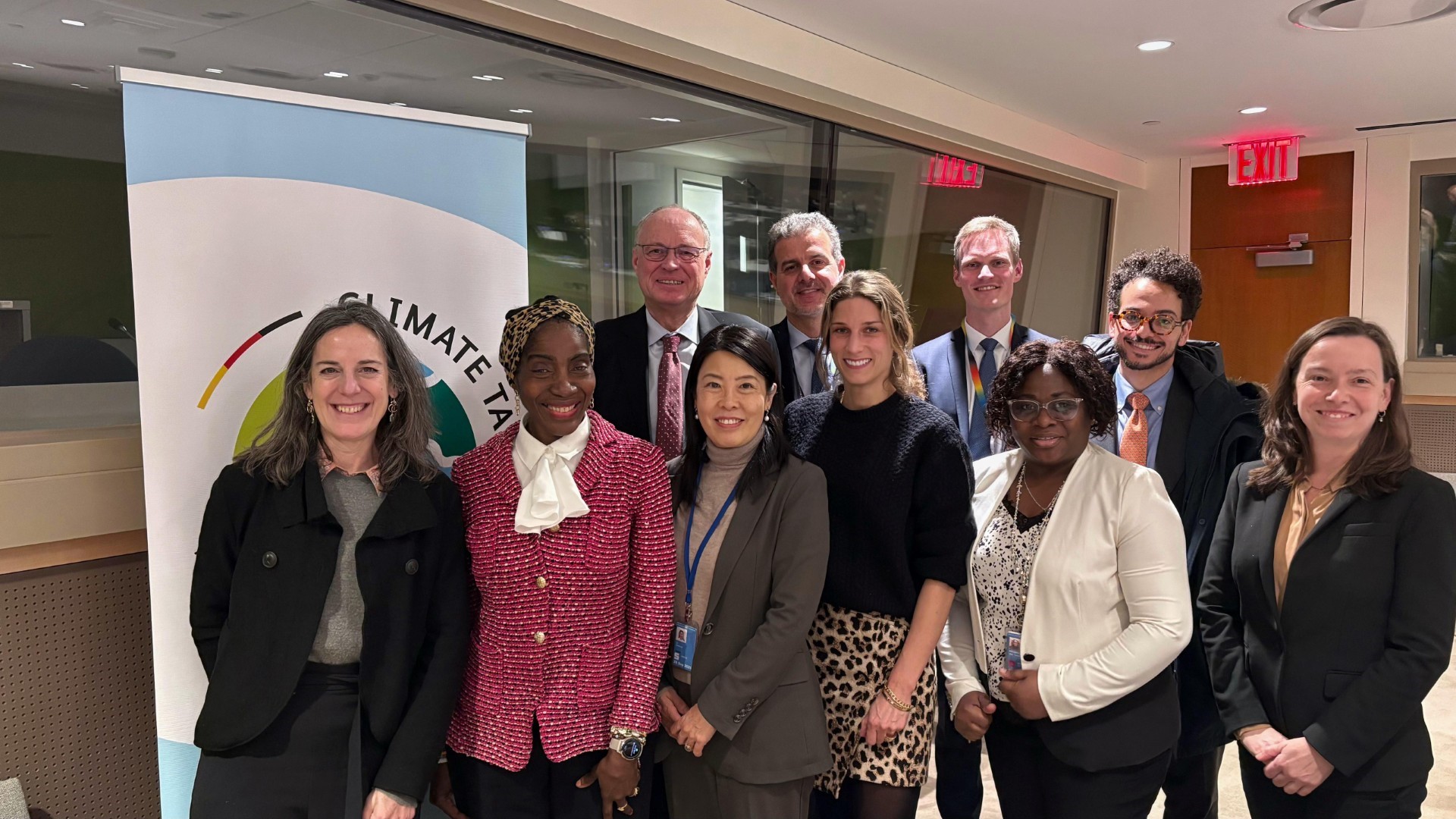
Other Alliance members to participate in the briefing were the UN Environment Programme (UNEP), INTERPOL, UNODC and IUCN.
For more information, please contact Elodie directly at elodie.perrat@wri.org

Keep Informed
Subscribe to Our Newsletter
Sign up here to receive news, analysis and event updates from the Nature Crime Alliance.